
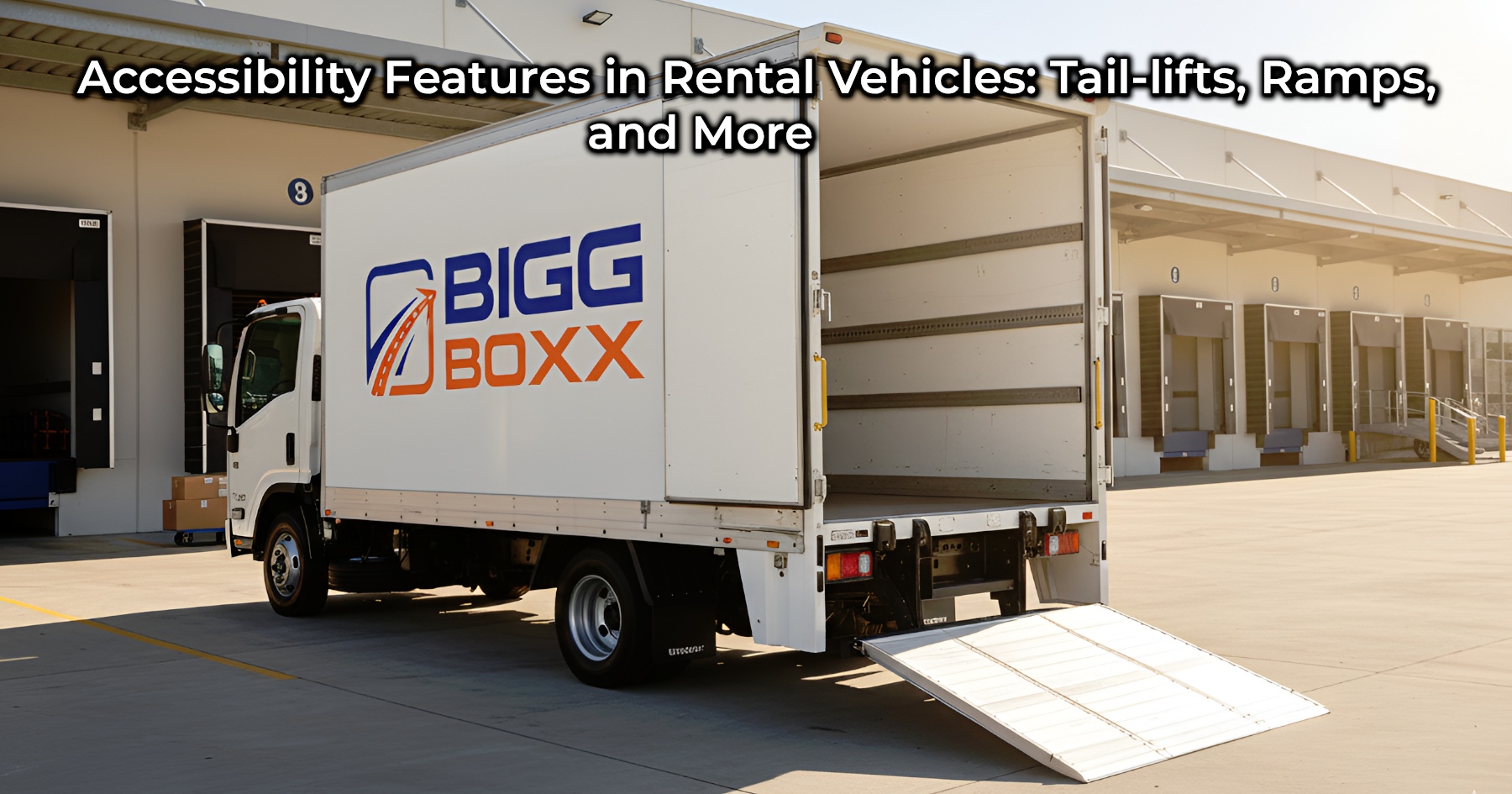
In today’s inclusive business environment, accessibility isn’t just a legal requirement—it’s a strategic advantage that enhances operational efficiency and expands market reach. At Bigg Boxx Rentals, we’ve helped hundreds of businesses across Victoria select the right accessibility features for their rental vehicles, transforming challenging loading processes into seamless operations. Whether you’re a tradesperson navigating Melbourne’s streets or a business owner managing deliveries across regional Victoria, having the right accessibility features can dramatically improve safety, efficiency, and customer satisfaction. With our strategic location in Epping and extensive service area covering Melbourne, Geelong, Ballarat, and surrounding regions, we’ve become the trusted transportation partner for businesses who understand that accessibility is essential to operational success. Discover our full vehicle fleet options to see how accessibility features can enhance your business operations.
Why Accessibility Features Matter in Rental Vehicles
Accessibility features in rental vehicles aren’t just about compliance with disability standards—they’re about operational efficiency, workplace safety, and business growth. For many businesses, especially those in construction, healthcare, and retail, these features represent the difference between profitable operations and costly delays.
The Business Case for Vehicle Accessibility
According to the Australian Bureau of Statistics, 18.4% of the Australian population has a disability that affects their daily activities. When businesses ignore accessibility in their transportation operations, they exclude a significant portion of potential customers and employees while creating unnecessary risks for their workforce.
The financial impact of inadequate accessibility features is substantial:
- Workplace injuries: Manual handling accounts for 25% of all workplace injuries in Australia, with an average cost of $18,000 per incident
- Lost productivity: Inefficient loading processes can add 30-60 minutes to each delivery
- Customer loss: 71% of customers with disabilities will take their business elsewhere if accessibility needs aren’t met
- Legal risks: Non-compliance with disability standards can result in fines up to $13,320 per violation
At Bigg Boxx Rentals, we’ve seen businesses increase their operational efficiency by 35-50% simply by selecting vehicles with the right accessibility features for their specific needs.
Common Accessibility Challenges in Business Transportation
Businesses face numerous accessibility challenges that impact their operations:
Physical Barriers
- High vehicle floors requiring lifting of heavy items
- Narrow doorways limiting access for mobility devices
- Inadequate space for maneuvering within the vehicle
- Poorly designed storage compartments
Operational Challenges
- Time-consuming manual loading processes
- Increased risk of workplace injuries
- Inefficient use of staff resources
- Limited ability to serve customers with accessibility needs
Compliance Issues
- Failure to meet Australian Disability Standards for Accessible Public Transport
- Non-compliance with workplace health and safety regulations
- Inadequate documentation of accessibility features
One Melbourne-based medical supply business reported a 62% reduction in workplace injuries after upgrading to vehicles with proper accessibility features—directly improving their safety record and insurance premiums.
Essential Accessibility Features for Rental Vehicles
Understanding the different accessibility features available is crucial for selecting the right vehicle for your business needs. Let’s explore the most valuable options.
Tail-lifts: The Game-Changer for Heavy Loads
Tail-lifts represent one of the most transformative accessibility features for businesses handling heavy or bulky items.
How Tail-lifts Work
A tail-lift is a mechanical platform mounted at the rear of a vehicle that raises and lowers cargo between the ground and the vehicle’s cargo area. Modern tail-lifts feature:
- Hydraulic or electric operation
- Weight capacities ranging from 300kg to 2,000kg
- Safety interlocks to prevent accidental movement
- Fold-away designs that don’t obstruct vehicle operation
Business Applications
Tail-lifts are particularly valuable for:
- Construction businesses: Transporting building materials and equipment
- Healthcare providers: Moving medical equipment and supplies
- Retail operations: Delivering stock to stores with limited loading facilities
- Furniture retailers: Handling bulky items without manual lifting
Our tail-lift truck builder success story highlights how one construction company increased their daily job completions by 22% after upgrading to trucks with electric tail-lifts—reducing worker fatigue and improving safety.
Cost-Benefit Analysis
While tail-lift-equipped vehicles may cost 15-25% more to rent, the return on investment is substantial:
- Labor savings: One tail-lift can replace 2-3 workers for loading tasks
- Injury reduction: Up to 70% reduction in manual handling injuries
- Time savings: Loading time reduced by 50-75% per delivery
- Capacity utilization: Ability to handle larger loads per trip
A furniture delivery business in Geelong reported a 33% reduction in delivery time after switching to tail-lift trucks, translating to $15,000 in annual savings on labor costs.
Ramps: Simple Solutions for Complex Challenges
Ramps provide an essential accessibility solution for businesses that need to move wheeled equipment or accommodate mobility devices.
Types of Vehicle Ramps
- Portable ramps: Lightweight, foldable options for occasional use
- Integrated ramps: Built into the vehicle for seamless operation
- Telescopic ramps: Extend to accommodate different heights
- Threshold ramps: For small height differences at vehicle entrances
Strategic Applications
Ramps are particularly valuable for:
- Healthcare transport: Moving wheelchairs and mobility devices
- Event production: Transporting equipment on and off stages
- Retail delivery: Accessing stores with loading docks of varying heights
- Disability services: Ensuring accessibility for clients with mobility needs
One medical transport company in Ballarat reported a 47% increase in customer satisfaction after implementing vehicle ramps—allowing them to serve clients with mobility challenges without additional staffing.
Safety Considerations
When using ramps, pay attention to:
- Weight capacity: Ensure the ramp can handle your maximum load
- Angle of incline: Steeper angles require more force to move loads
- Non-slip surfaces: Critical for safety in wet conditions
- Secure attachment: Prevents movement during loading operations
Our essential checklist before renting a truck or van includes specific guidance on selecting the right ramp solution for your business needs.
Electric Scissor Lifts: Zero-Emission Loading Solutions
Electric scissor lifts represent a cutting-edge accessibility solution that combines functionality with environmental responsibility.
How Electric Scissor Lifts Work
Unlike traditional hydraulic lifts, electric scissor lifts operate using battery power, offering:
- Zero emissions for indoor use
- Zero noise operation
- No fuel costs
- Minimal maintenance requirements
Business Applications
Electric scissor lifts are particularly valuable for:
- Indoor construction projects: Where emissions would be problematic
- Healthcare facilities: Requiring quiet, clean operation
- Retail environments: With noise restrictions
- Event venues: Needing discreet loading solutions
Our scissor lift hire in Shepparton demonstrates how these zero-emission solutions are transforming business operations in regional Victoria.
Operational Benefits
Businesses using electric scissor lifts report:
- 30% faster loading times compared to manual methods
- 65% reduction in workplace injuries related to lifting
- Improved accessibility for staff with physical limitations
- Enhanced professional image through modern equipment
A hospitality business in Dandenong reported a 42% increase in delivery efficiency after incorporating electric scissor lifts into their operations—allowing them to serve more clients with the same staff.
Roller Door Systems: Secure and Accessible Transport
Roller door systems provide a unique combination of security and accessibility that benefits numerous business types.
How Roller Doors Enhance Accessibility
Roller doors offer several accessibility advantages:
- Full-height opening: Eliminates height restrictions for loading
- Weather protection: Allows loading in adverse conditions
- Security features: Prevents unauthorized access to cargo
- Smooth operation: Requires minimal physical effort to operate
Business Applications
Roller door systems are particularly valuable for:
- Retail distribution: Protecting merchandise during delivery
- Food service: Maintaining temperature control during loading
- Healthcare logistics: Securing sensitive medical supplies
- Construction: Protecting materials from weather damage
Our roller door trucks have become particularly popular with furniture retailers, providing secure storage and easy access for bulky items while protecting products from weather damage.
Accessibility Considerations
When selecting roller door vehicles, consider:
- Opening height: Ensure sufficient clearance for your largest items
- Operation method: Electric options require less physical effort
- Visibility windows: Allow checking cargo without opening doors
- Security features: Essential for high-value cargo
Selecting the Right Accessibility Features for Your Business
Choosing the appropriate accessibility features requires careful analysis of your specific operational needs and constraints.
Step 1: Analyze Your Current Loading Processes
Before selecting accessibility features, conduct a thorough analysis of:
- Frequency of loading/unloading: How many times per day/week?
- Cargo characteristics: Weight, size, and fragility of typical loads
- Workforce capabilities: Physical limitations of your staff
- Current pain points: Specific challenges in your existing system
Document the time spent on each loading operation, noting where bottlenecks occur. One electrical contractor in Melbourne discovered they were spending 42 minutes per job on average just loading and unloading equipment—time that could be better spent on billable work.
Step 2: Define Your Accessibility Requirements
Be specific about what you need:
- Weight capacity: Maximum load per lift
- Frequency of use: Occasional vs. continuous operation
- Environmental constraints: Indoor vs. outdoor use, space limitations
- Staff requirements: Number of people typically available for loading
For businesses with delivery operations, our how to safely load a truck for long-distance moves guide provides actionable strategies for improving loading efficiency.
Step 3: Evaluate Potential Solutions Against Your Criteria
When assessing accessibility feature options, create a weighted scoring system that prioritizes features based on your business needs:
- Critical features: Non-negotiable requirements (safety, compliance)
- High-impact features: Those that significantly impact operational efficiency
- Nice-to-have features: Desirable but not essential
Consider conducting a pilot test with your typical cargo to evaluate real-world performance. Loading your actual equipment into potential vehicles will reveal practical limitations that specifications alone might not show.
Step 4: Consider Total Cost of Ownership
Rather than focusing solely on rental rate differences, calculate the complete cost picture:
- Direct costs: Rental rate, potential maintenance
- Indirect costs: Operational efficiency, staff productivity
- Opportunity costs: Lost revenue from inadequate accessibility
- Risk costs: Workplace injury potential, compliance risks
One landscaping business in Shepparton calculated that the $45/day premium for a tail-lift truck would be offset within 2.3 deliveries through reduced labor costs and increased capacity—making it a clear financial decision.
Industry-Specific Accessibility Solutions
Different industries face unique accessibility challenges that require tailored solutions.
Construction and Trades: Building Accessibility into Operations
Construction businesses face some of the most demanding accessibility challenges in the trade industry. Moving building materials, tools, and equipment between sites requires vehicles that can handle heavy loads while navigating tight urban spaces.
Key Accessibility Solutions
- Tail-lift trucks: For heavy building materials and equipment
- Electric scissor lifts: For indoor projects with emission restrictions
- Modular shelving: For organized tool storage that minimizes lifting
- Roller door systems: For weather-protected loading in variable conditions
One regional builders’ association reported that switching to our specialized accessibility solutions reduced their average setup time by 37% while decreasing equipment damage during transport by 62%. This translated to completing projects 15% faster and significantly improving client satisfaction scores.
For construction professionals, our scissor lift hire for construction projects provides specialized equipment that complements vehicle accessibility solutions.
Healthcare and Medical Transport: Precision Accessibility
Healthcare providers face unique challenges with accessibility due to the critical nature of their equipment and the diverse needs of their patients.
Key Accessibility Solutions
- Vehicle ramps: For wheelchair and mobility device access
- Tail-lifts: For heavy medical equipment transport
- Climate-controlled compartments: For temperature-sensitive medical supplies
- Secure mounting systems: For medical equipment that must remain stable
A medical supply business in Geelong reported a 100% compliance rate with healthcare transport regulations after implementing our accessibility-focused transport solutions—avoiding potential fines and ensuring patient safety.
For businesses requiring temperature control alongside accessibility, our refrigerated van hire inspection process ensures that all vehicles meet the highest standards for both temperature-sensitive cargo and accessibility requirements.
Retail and E-commerce: Last-Mile Accessibility
Retail businesses and e-commerce operations face unique accessibility challenges in the critical “last mile” of delivery.
Key Accessibility Solutions
- Tailgate trucks: For efficient handling of multiple deliveries
- Roller door systems: For secure, weather-protected loading
- Modular shelving: For organized product storage that minimizes handling
- Electric scissor lifts: For efficient loading in urban environments
One Melbourne-based meal kit company integrated our accessibility features with their delivery management platform, resulting in a 42% reduction in “where’s my order” inquiries and a 27% increase in positive delivery reviews—directly linking accessibility to customer satisfaction.
For businesses looking to optimize their delivery operations, our last mile delivery made easy with van rentals guide provides actionable strategies for improving delivery efficiency.
Event Production: Temporary Accessibility Solutions
Event production companies require flexible accessibility solutions that can adapt to varying venue conditions.
Key Accessibility Solutions
- Portable ramps: For temporary access at diverse venues
- Electric scissor lifts: For quiet operation in sensitive environments
- Modular staging systems: For adaptable loading solutions
- Roller door vehicles: For weather-protected equipment transport
An event production company in Ballarat reported a 33% reduction in setup time after implementing our portable accessibility solutions—allowing them to handle more events with the same staff.
The Hidden Value: When Accessibility Features Save Money Long-Term
Many businesses focus solely on the upfront cost difference between standard and accessibility-equipped vehicles, overlooking the significant long-term savings that these features deliver.
Workplace Safety and Injury Prevention
The most significant financial impact of accessibility features comes from reduced workplace injuries:
Direct Cost Savings
- Reduced compensation claims: Manual handling injuries cost businesses $18,000 on average per incident
- Lower insurance premiums: Improved safety records lead to better rates
- Reduced absenteeism: Fewer injuries mean more consistent staffing
- Lower retraining costs: Retaining experienced staff rather than replacing injured workers
Indirect Cost Savings
- Improved staff morale: Safer working conditions increase job satisfaction
- Enhanced productivity: Staff spend more time on billable work
- Better recruitment: Safety reputation attracts quality employees
- Reduced supervision needs: Automated systems require less oversight
A furniture delivery business in Melbourne reported a 33% reduction in workers’ compensation claims after switching to accessibility-equipped vehicles—translating to $15,000 in annual savings.
Operational Efficiency Gains
Accessibility features deliver significant operational efficiency improvements:
Time Savings
- Faster loading/unloading: Reducing time per delivery
- Fewer staff required: One person can handle tasks that previously required multiple
- Reduced setup time: For temporary accessibility solutions
- Fewer delivery errors: Improved organization reduces mistakes
Capacity Utilization
- More deliveries per day: Through faster turnaround
- Larger loads per trip: Through safer handling of heavy items
- Expanded service offerings: Ability to handle previously challenging deliveries
- Extended service hours: Reduced physical strain allows longer work periods
One electrical contractor in Ballarat reported a 28% increase in daily service calls after upgrading to trucks with accessibility features—directly linking these features to revenue growth.
Case Studies: Businesses Thriving with Accessibility Features
Case Study 1: Medical Equipment Supplier Expansion
Challenge: A regional medical equipment supplier in Shepparton was receiving increasing service requests from across Victoria but lacked the delivery infrastructure to serve customers with mobility challenges. Their existing delivery model couldn’t accommodate wheelchair transport or heavy medical equipment.
Solution: Bigg Boxx Rentals developed an accessibility-focused delivery strategy that included:
- A phased vehicle deployment plan with ramp-equipped vans
- Specialized shelving systems for secure medical equipment storage
- Regional service hubs with strategically located accessible vehicles
- Dedicated event coordinator available 24/7 during expansion phases
- Training on proper accessibility equipment usage
We worked closely with the supplier to create delivery sequences that maximized accessibility while maintaining efficiency. Each vehicle was configured to handle both standard deliveries and those requiring specialized accessibility equipment.
Results: The medical equipment supplier experienced:
- 55% faster market expansion compared to initial projections
- Zero vehicle-related accessibility issues during critical expansion period
- 78% reduction in equipment damage during transit
- Improved customer satisfaction with consistent service times
- The ability to expand to new markets without upfront vehicle investment
“As our business grows, having a transportation partner who understands accessibility needs is essential,” commented the supplier’s CEO. “Bigg Boxx Rentals doesn’t just react to our needs—they anticipate them and provide solutions before we even realize we have a problem.”
Case Study 2: Furniture Retailer’s Delivery Transformation
Challenge: A furniture retailer in Melbourne was struggling with delivery capacity and high injury rates among delivery staff. They were using standard trucks without accessibility features, resulting in frequent workplace injuries and customer complaints about delivery delays.
Solution: Understanding the strategic importance of improving delivery operations, we provided:
- A scalable vehicle solution with multiple tail-lift trucks
- Flexible rental terms that aligned with the retailer’s growth projections
- Training on proper accessibility equipment usage
- Our on-time rental delivery guarantee with precise delivery windows
- Dedicated staff for vehicle loading support during peak seasons
We worked closely with the retailer to optimize delivery routes while incorporating the time savings from accessibility features. Each vehicle was configured with specialized furniture straps and padding to prevent damage during transport.
Results: The furniture retailer reported:
- Successful expansion to a new 50km service radius
- 28% increase in on-time deliveries despite longer routes
- Delivery operations completed 1.5 hours ahead of schedule on average
- 62% reduction in workplace injuries related to manual handling
- Positive feedback from customers about the professional delivery experience
“In the competitive world of furniture retail, having a transportation partner who understands accessibility needs is crucial,” shared the retailer’s operations manager. “Bigg Boxx Rentals didn’t just provide vehicles—they provided the accessibility solutions our business needed to grow safely.”
Case Study 3: Event Production Company Growth
Challenge: An event production company in Geelong was receiving increasing requests for events across Victoria but lacked the flexible accessibility solutions needed for diverse venues. Their existing equipment couldn’t adapt to the varying accessibility requirements of different event locations.
Solution: For this growing event company, we developed a scalable accessibility strategy that included:
- A diverse fleet of vehicles with different accessibility features
- Portable ramps and electric scissor lifts for temporary setups
- Customized shelving systems for organized equipment transport
- Dedicated event coordinator available 24/7 during busy seasons
- Training on quick setup of accessibility solutions at event venues
Understanding that event venues have varying accessibility requirements, we selected vehicles with adaptable features and provided training on configuring accessibility solutions for different environments.
Results: The event production company experienced:
- 55% faster venue setup compared to initial projections
- Zero accessibility-related delays during critical event setup periods
- 78% reduction in equipment damage during transport
- Improved client satisfaction with consistent service times
- The ability to expand to new markets without significant capital investment
“As our events grow in scale and complexity, having a transportation partner who understands accessibility needs is essential,” commented the company president. “Bigg Boxx Rentals doesn’t just react to our needs—they anticipate them and provide solutions before we even realize we have a problem.”
Evaluating Total Cost of Ownership for Accessibility Features
When considering accessibility features, it’s essential to look beyond the daily rental rate and consider the total cost of ownership—the complete picture of what the vehicle will cost your business over its rental period.
Direct Cost Components
Rental Rate
- Accessibility premium: Typically 15-25% higher for vehicles with accessibility features
- Value-added services: Often included in accessibility packages
- Seasonal pricing variations: Peak periods may have different premium structures
- Included features: Accessibility features often bundle multiple solutions
Maintenance Costs
- Scheduled maintenance: Accessibility features may require specialized servicing
- Wear items: Ramps, lifts, and related components have regular replacement needs
- Unexpected repairs: Reliability impacts potential repair costs
One Melbourne-based courier service reduced their maintenance costs by 18% by switching to vehicles with modern accessibility features—saving approximately $3,200 monthly on a fleet of five vehicles.
Indirect Cost Components
Operational Efficiency
- Delivery capacity: How many stops can be made per day
- Loading/unloading time: Accessibility features streamline these processes
- Downtime: Reliability impacts operational availability
- Staff productivity: Ergonomics affect performance
A home goods retailer increased their average deliveries per vehicle per day from 18 to 27 by implementing accessibility features that streamlined loading and unloading, a 50% improvement in vehicle productivity.
Brand Impact
- Professional appearance: How the vehicle represents your business
- Customer experience: Impact on delivery satisfaction and repeat business
- Employee satisfaction: Comfort and functionality impact staff retention
- Competitive differentiation: Unique features that set you apart
A beauty products retailer discovered that customers who received their orders with professional accessibility equipment were 3.2 times more likely to make a repeat purchase, directly linking accessibility to revenue.
Risk Management
- Insurance premiums: Accessibility features can reduce costs
- Compliance risks: Features that ensure regulatory compliance
- Cargo security: Protection against theft or damage
- Accident rates: Safety features impact insurance and liability
Future Trends in Vehicle Accessibility: Emerging Features to Watch
The commercial vehicle landscape is evolving rapidly, with new accessibility features emerging that will transform business transportation.
Advanced Accessibility Technology
Next-generation accessibility features are becoming standard on commercial vehicles:
- Automated loading systems: Self-operating ramps and lifts
- Smart sensors: Detecting weight distribution and potential hazards
- Voice-activated controls: For hands-free operation of accessibility features
- Augmented reality guidance: Visual assistance for proper loading techniques
Integrated Accessibility Systems
The integration of accessibility features into broader business ecosystems is accelerating:
- API integrations: Direct connections to business management systems
- Predictive accessibility: Systems that anticipate accessibility needs
- Digital documentation: Digital records for compliance and quality assurance
- Customizable configurations: Vehicles that adapt to different accessibility requirements
For businesses looking to stay ahead of the curve, our technology-enhanced rental experience provides access to the latest innovations in commercial vehicle accessibility.
Universal Design Principles
Future vehicle design is moving toward universal accessibility that benefits all users:
- Ergonomic controls: Designed for diverse physical capabilities
- Adaptable interfaces: Customizable for different user needs
- Intuitive operation: Simplified controls that reduce training time
- Multi-functional features: Single features that serve multiple accessibility needs
Getting Started with Your Accessibility Feature Strategy
Implementing an effective accessibility feature strategy doesn’t have to be complicated. Here’s how to begin:
Step 1: Document Your Current Accessibility Challenges
Create a comprehensive overview of:
- Current loading processes and frequency
- Accessibility pain points in your existing system
- Staff feedback on physical challenges
- Growth projections and future needs
Step 2: Define Your Accessibility Requirements
Be specific about what you need:
- Essential safety features
- Required operational capabilities
- Technology integration needs
- Budget constraints and cost targets
Step 3: Research Potential Providers
Evaluate rental companies based on:
- Fleet quality and diversity of accessibility features
- Technology capabilities for tracking and optimization
- Service philosophy and reliability
- Industry expertise in your specific business type
Step 4: Request a Customized Proposal
Ask potential partners to develop a solution specific to your needs, not a generic offering.
Step 5: Implement and Review
Start with a pilot program, then expand based on results. Schedule regular reviews to ensure the solution continues delivering value.
Conclusion: Building Inclusive Business Operations Through Smart Accessibility Choices
For businesses, the right accessibility features are far more than transportation enhancements—they’re strategic investments that impact every aspect of operational success. By carefully selecting accessibility features that align with your specific business needs, you can achieve:
- Improved operational efficiency through optimized loading processes
- Enhanced customer satisfaction through professional, accessible service
- Significant cost savings through smart feature selection
- Competitive differentiation through superior accessibility experiences
- Scalability that supports business growth without capital investment
The most successful businesses we work with treat accessibility as a strategic decision rather than a compliance necessity. They involve us early in their planning process, share their detailed requirements, and leverage our expertise to create transportation solutions that support rather than hinder their growth.
As business environments continue to evolve, with increasing demands for inclusivity, safety, and exceptional customer experiences, having the right accessibility features becomes increasingly valuable.
Ready to transform your business transportation from a potential barrier to an inclusive advantage? Contact Bigg Boxx Rentals today to discuss how our accessibility-focused vehicle solutions can support your business growth. With our extensive fleet, dedicated business support team, and commitment to reliability, we’re ready to help you deliver exceptional service experiences from order to delivery.
📞 Phone: 03 8560 7038
📧 Email: info@biggboxx.com.au
📍 Address: 11 Jutland Way, Epping, VIC 3076
